Showing posts with label Lifestyle. Show all posts

Thursday, 13 February 2014

The Lion King: A Magical Spectacle

Sat in the Grand Circle of the Lyceum Theater in London while waiting for the seats to be filled up, mostly by students on a day trip or tourists on a short visit to the British capital, I started to feel slightly apprehensive on whether the theatrical version of the Lion King we were about to see would live up to its critical acclaim. 

As a child, my siblings and I were obsessed with the 1994 Disney movie we kept replaying the VHS tape until the rented video nearly got broken. The coming of age movie theme and the memorable songs has made it until now my favourite cartoon film of all time. When I found out about the West End version, I've put it forward on our annual list of Things To Do and John booked the ticket for a day out in February. 

My husband and I are avid theatre-goers, preferring this medium to film, which made me feel more queasy about dragging him all the way to London with a late night train to catch that same day and a baby (who was left with his grandmother) to tuck in bed before midnight. But when the show opened with a bright orange sun rising over the African jungle followed by a procession of animals through the audience including a sizeable elephant, the child in me was reawakened and all cynicism replaced with awe. 

The show brought the African Savannah in all its colourful glory with a cacophonous cavalcade that took our breath away. The impressive animal puppets absorbed the human body into a whole Serengeti of stylised animal shapes, capturing the essence of the animals in the wild while nodding subtly to the human faces of Africa. It was a thunderous spectacle of live theatre with so much thought and detail that went into the choreography it was of little wonder that more than 10 years after its debut in London, even a mid-week matinee show can still command a full house. 

But it wasn't just the visual pageantry accompanied by African drumbeats that made the musical so popular, it also caters to different audiences who would leave the theatre with something to take. My special memories are the shared scenes between father and son, when Mufasa took Simba to the top of Pride Rock to marvel at the extent of the kingdom he would someday inherit and the lessons he attempted to impress on the curious cub. One particular line struck me, when the young lion repulsively pointed at the ugly vultures feeding on dead animals and his father told him that they are only doing what they are meant to do, that everything exists in a delicate balance called the Circle of Life which we would all do well to respect. That awareness is something our own child will also be taught. 

The Lion King is a definite must see, the West End version was nostalgic, breath-taking and soul-stirring, well worth the £45 (cheapest) per ticket  we had to pay. 

The Lion King Musical
The Circle of Life: Image from weblink.
The Lion King Musical
The Sun Rising: Image from weblink.

Thursday, 11 April 2013

Waiting for Spring

Winter lingered long this year, an unbidden guest that has outstayed its welcome. Days after the last clumps of snow have melted on the ground, the chilly temperature dragged on bringing with it frosty mornings and thick mists hovering over the City of Seven Hills. 

It was a landscape so different from a year ago when as early as the end of February, the snowdrops have already fleeted away in hibernation and crocuses in their vibrant colours - violent, white and yellow - carpeted the grounds of Hillsborough Park. Along the pathways, rows of tulips and daffodils have sprung up, their flowers ready to unfold in a few weeks time. When we came back a month later from our extended holiday in Central Europe, they were all gone, replaced by the cherry blossoms in full bloom. 

Where autumn speaks of tragic endings, spring evokes hopeful beginnings that when it arrives, it wipes away the memories of the colourless winter days just gone. Perhaps the long wait for spring is in fact character building - it teaches you patience and gratefulness. Patience to carry on until the end of the dark tunnel and gratefulness for the light that awaits you there. 


Sheffield in Bloom
Sheffield in bloom
Colours of spring
Sheffield in bloom
Sheffield in bloom

Wednesday, 3 April 2013

Home No. 5: Project Kitchen

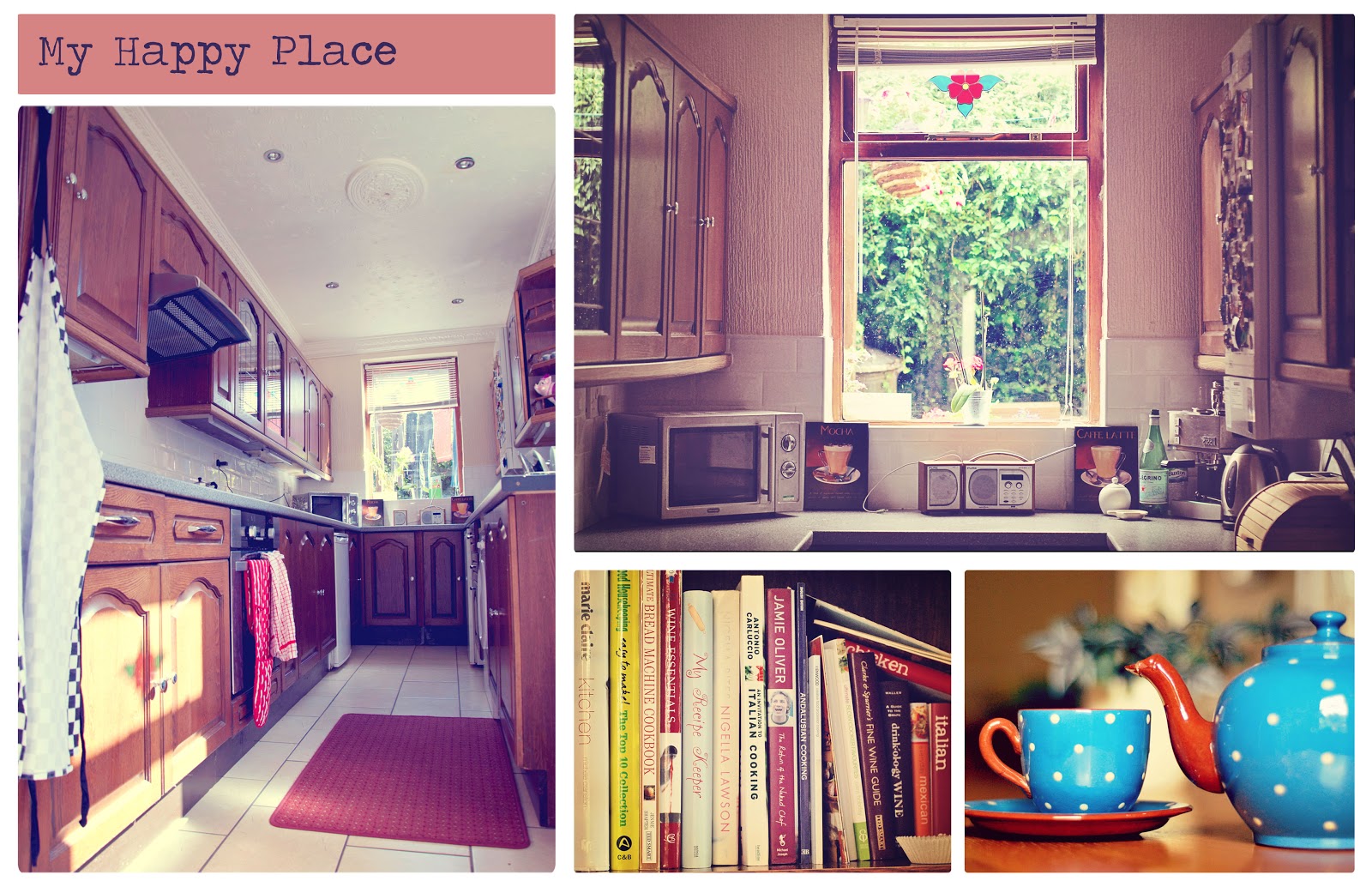
Our quaint little kitchen is one of the charming features of our new home with the mediterranean blue cupboards that gives it a cottage feel. The only problem was space, at least for someone whose latest obsession involved plenty of activities in the kitchen. But small spaces meant a lot of opportunities for creativity and there is a wealth of inspiration from the internet, my personal favourite being the Easy Living website. 

So with a few trips to my favourite shops, we managed to fit our ever-increasing collection of kitchenwares in this small space. It meant getting vintage-looking storage jars and bric-a-bracs from the charity shops at the bottom of our road, buying breakfast cereal containers from Wilkinsons and putting up IKEA shelves for the pots and pans. To solve the problem of not having enough shelves, we bought an Argos solid pine shelf and turned it into a pantry with the same look as the rest of the kitchen cupboards.   

The result was a very homely kitchen of our liking with still some space for my new favourite pastime of baking!


Saturday, 30 March 2013

Home No. 5: Project Bedroom

Over the past few weeks, I have been obsessing over home designs and scouring the internet for inspiration. I can't believe the wealth of information that is now available online for interior decorator wannabes like me: Pinterest, IKEA and Easy Living to name but a few. 

When we moved in to our new home, we were confronted with a blank canvas. We had to buy all the fittings and decorate it as we wanted. This being the fifth house move we've made during the last three years, we have become wiser when it came to buying furniture which meant no more trips to Ikea to buy flat pack furniture that would not last. Instead, for our bedroom we invested in a solid oak chest of drawers from Swag, a discount furniture shop in Sheffield we have discovered from our previous landlord.  We inherited a 20-year-old solid pine set of wardrobes from Dad's cellar and kept our sensible metal Ikea bed frame and bedside tables. 

Once the essentials are down, it was a joy to shop around for furnishings. If I didn't have a sensible husband who kept reminding me about storage issues, I would have bought everything I fancied from all the shops we've visited. He did allow me to pick some ornaments for my dressing table like the vintage glass perfume bottles and jewellery box from Dunelm Mill. The curtains were from Home Bargains, previously bought on our 3rd house move and the nearly matching bedsheets are from Wilkinsons in Hillsborough shopping centre. 

My creative contributions are the styro letters I have picked up from a Pinterest post using up cycled materials from the furniture delivery boxes and painted over with black acrylic paint. The accessories board is a poor version of an Ikea mood board inspiration but it's still a useful one. 

Our bedroom may be smaller than our previous one but it's definitely comfortable and homely!

ikea beds
home inspiration
interior design
home inspiration
home inspiration

Friday, 29 March 2013

Home No. 4: Dorothy Road

Dorothy Road in Hillsborough is a street lined up with Victorian terraced houses where workers from the city's steel industry used to live. Decades on and after the soots from the factories have cleared and the houses have changed ownership, this street is now home to professional employees with young families and a handful of pensioners. 

These houses were built to last and last they do. In Britain, and throughout the Old World, buildings such as these endure hundreds and hundreds of years. Only a re-plastering a couple of times or so every century is required to keep these buildings as good as when the first ever occupants arrived here. Solid brick and stone built, they offer a build quality that most modern concrete or glass buildings can only dream of. As they say, if Paris, Rome, Vienna, Madrid, and most of the other great old world cities were built to today's standards we would not have had the opportunity to see them as we do now. It makes you think with a certain degree of melancholy how today's flamboyant cities don't just look very generic and bland but will deteriorate much more rapidly, especially those in the 'flat pack' countries such as China and the United Arab Emirates amongst many others. False economy, a not so efficient use of resources, and not thinking long term springs to mind. 

These houses look deceptively small from the outside but is actually spacious inside usually with three bedrooms including a converted attic, a kitchen with a separate dining room, a living room with a bay window, a large bathroom and a dry cellar. At the back is a good-sized garden that gets a lot of sunlight until late in the summer evening if you have a south-facing one. 

When we came to view No. 74, I fell in love with the place. Oozing with character that most newer builds just simply lack, it ticked all my boxes. John was dubious about its size, we have previously lived in a one bedroom flat and briefly in my mother-in-law's attic but I was very adamant. I loved the space, the furnishings and the garden. So Dorothy Road became House No. 4 in just two years in Britain. 

If we were living anywhere other than this country with no huge heating bills and plenty of sunshine, it would have been a perfect house. But alas, there were those things to consider and suddenly a huge pretty house by the end of summer suddenly felt cold and empty. There was the subject of keeping it clean too, a chore that needed to be done every weekend that usually fall on my husband's shoulders. It became too big for us to manage. 

But there were still no regrets about living there. It has taught us a lot about properties and what to look out for when we would eventually buy our family home. 

home inspiration
living room ideas
home inspiration
home inspiration
Ikea study
home ideas
bedroom ideas

Thursday, 7 March 2013

Thoughts Over a Cup of Coffee


Sheffield
There is a time... to sit under the sun. 
Hunters Bar in Sheffield is notorious for its traffic congestion issues during the weekdays when daily commuters from the outskirts of the city make their way to work. There had been a proposal once to bring back the tramlines but this was met with strong opposition by the middle class homeowners who pointed out that their properties will plummet in value if such monstrosity will ever come near their expensive homes. So instead the S10 residents opted for the endless procession of the CO2-puffing 4WDs making their regular hour-long journey from the south end of the city to the centre of town.

I have lived in this affluent part of Sheffield during my first few weeks in Britain and found the transport links tedious. After moving to a neighbourhood that is serviced by a very reliable tramline, I couldn’t imagine a different life. Occasionally though, we still find ourselves back in this trendy area that is home to the city's most fashionable independent shops and highly-rated restaurants situated by the long stretch of Ecclessall Road and in its back streets. 
Just like one Sunday after church in the middle of February when the winter spell took a short break to give us a reprieve and so we found ourselves sipping the most excellently brewed cup of coffee and a slice of Baklava from the Greedy Greek Deli just off the corner of the roundabout. It was one of those weekends filled with spontaneous surprises that my husband has a knack for not planning.

The sky was as clear as sapphire and the midday sun blazed torridly over the seven hills that only a few days ago was covered almost entirely by a thick layer of snow. We were on a perfect spot, basking on the warmth of the glorious sun directly above us and took our time watching the rest of the world go by.

We were not alone. Cafes all over the city have set up chairs outside to cater to the needs of the Vitamid D deprived customers who came alone with their Sunday papers or with families and friends for a chat.

I have only recently understood this European cafe culture. I have always wondered why I should be paying a couple of pounds for a cup of tea or coffee that I can capably make at home at tenth the price. But that wasn't the point.

Coffeehouses, from a cultural standpoint, largely serve as the centres of social interaction: a place for the community to meet up, talk, write, entertain one another or pass time, whether individually or in small groups. It is an informal club for its regular patrons [W]. Many of these coffeehouses in Europe have served as a breeding ground for political change, 'a meeting place for intellectuals, writers and artists to discuss their work and politics' [B].

My appreciation of this kind of coffee experience began one cold December evening in Paris when we entered an insconspicous cafe near the Eiffel Tower after a day of endless walking. It was supposed to be a short stop in a city where there is not enough time to see all the sights but we ended up doing what everyone else seems to be doing: enjoying the warm cup of coffee with no desire to do anything else.

It was different from the culture I have grown up with, handed down from our American colonisers, in which coffee is poured in a paper cup, ordered 'on the go' from Starbucks or a Nescafe vending machine and drank whilst striding along busy boulevards or trapped inside a commuter jeepney or train, no more than a fuel to kick off a working day.

Rediscovering coffee culture as a social experience and a lifestyle rather than a routine has definitely been an enlightening experience and one that I have learned to enjoy. The price of a cup of coffee in a proper ceramic cup and saucer is a cheap price to pay for an opportunity to slow down and enjoy life a little.

Hillsborough
Hillsborough
Cafedotnet, Middlewood Road, Hillsborough

Friday, 25 January 2013

A Change of Heart

Book lover

It all began with Sweet Valley Twins No. 12. My ten-year-old self was rummaging through my mother's work drawers (without her knowledge of course) and discovered the confiscated treasure. An unfortunate student in her fifth grade class was caught reading the book during lessons and was severely punished. The book was returned eventually but not before I have been drawn to the fictional world of Jessica and Elizabeth in sunny California where adventure beckoned at every turn. 

By the time I was twelve and have read at least a hundred books on the series, half of them I owned, I was ready to move on. Well, to Babysitter's Club that is, where I collected at least 30 books on the series. Then in high school, I discovered the thicker volumes of Sydney Sheldon, John Grisham, Ken Follet and Mary Higgins Clark amongst others. My bookshelf has begun to look like a library, with a single author having five or more books on my shelf. The best count was Agatha Christie's with a whopping 50 books, most of them bought from my allowance as a staff writer in a corporate paper whilst at college. 

This compulsion only grew stronger once I entered the working world. Reading has become my escape from the lonely weekends I would spend in my windowless room in Makati where I would read until the wee hours of the morning lit only by a dim bedside lamp (how I managed to keep a 20/20 vision until now is still a mystery). Three years in that miserable dump has produced a hundred more paperback novels and hardbound books from my weekly visits to the bookshops. 

When I left to work overseas, I sent all of them home with a heavy heart. But the habit did not die. Even a cramped country like Gibraltar has an abundance of second-hand novels that soon I was rebuilding a library. By this time, it was no longer about reading them, it has become a desire to hoard evidenced by the fact that of the 15 James Patterson novels I have bought from my brief fascination with his psychological thrillers, I have only finished three. But this realisation did not stop me from acquiring more. Of the two medium boxes I packed when I left for Britain, a quarter was occupied by my books alone. 

This addiction was not helped by the wealth of charity shops selling cheap second hand books in Sheffield. I stopped buying bestsellers and started collecting works of critically acclaimed novelists hoping that I would be able to learn from them. But the more I collected them, the less time I have to flip through their pages and before I knew it, another hundred books have gathered dusts and cobwebs in our library. 

If they can only sit in the bookshelf until I would have time for them, then it wouldn't have been a problem. But we have moved into four different houses in the last three years and the storage problem has propped up in more than two occasions, an issue I refused to acknowledge but it was something that my husband was determined to address. 

"A Kindle is the answer", he said one day. 
"I don't know", I replied. "It wouldn't be the same."

Besides, it was everything against my principles, Amazon being one of the biggest tax evaders of this country and the cause of so many businesses in the high street closing down. 

But his insistence and another imminent move sealed the deal and last week, we bought the handheld device from a tax-paying company that sells the product which turned out better than expected. 

I would still prefer the paperback of course and someday when we have finally 'settled down', I might have a chance to rebuild my library. But for the meantime, my beloved books will find a home in my sister's bookshelves in our family home where the rest of the 400 novels she has inherited dwells (memories of our childhood she says, that's why she refuses to give any of them away). And the Kindle will keep me company for now. 


Tuesday, 11 December 2012

Our Christmas Tree is Up


When I announced that we will be doing our tree during the weekend, my friend Andreea shared that in Romania, their Christmas tree does not get decorated until the eve of December 24 which kickstarts their yuletide celebration. As children, they were made to believe that if the tree does not get ready by midnight, Santa Claus will not have anywhere to put his presents. 

This fascinating piece of information has led me to look at the colourful history of this important Christmas tradition and discovered its pagan roots from early modern Germany which has survived their conversion to Christianity. With the endorsement of European royal families in the 19th Century, this expression of German culture amongst emigrants overseas has been adopted all over the world. 

This tradition is also being practiced in my homeland and the most beautiful Christmas trees I have ever seen remains to be those of my childhood’s, before our family could afford the big plastic evergreens we have adopted later on. We don't have a lot of pine trees in my country but with a wealth of local materials and my mother’s creativity, we have always had a Christmas tree. My favourite amongst them was a large piece of dried twig from the forest at the back of our house. It was placed on a tub held up by giant stones and decorated with soap bubbles amidst all the laughter as we pretended that snowflakes were falling on its branches.

So whilst feeling nostalgic about the Christmases of my youth, John and I embarked on the joyful tradition of putting up our tree during the weekend. It stared off with the most important task of choosing the tree, a Nordman Fir we buy from the Tree Amigos, an independent retailer who grows affordable and sustainably farmed trees. Of course the plastic tree is the greener and cheaper option as they can be put up every year but there is something almost magical about a real tree inside the house and it’s an experience that I look forward to every year.
The choosing of the tree itself requires a lot of careful consideration. It has to be the right height and must have just enough thickness to fit in the home. We were confronted with two difficult choices this year, one that is grand and would reach the ceiling of our lounge and another that is small and cosy. In another year perhaps when we have become a grown family we would have taken home the taller one but we settled for the smaller tree which we decorated rather tastefully if I’m allowed to say so.
So yes our tree is up, ready for us to snuggle under the blankets in front of the warm fire as we brace ourselves for yet another cold December.

Thursday, 6 December 2012

So This is Christmas


A Filipino, wherever they are in the world, would always long to be home at Christmas time. It's been five years since I have last spent this merry season with my family and the yearning only grows with time. I have walked along the street markets of great European cities, sang carols with my church family in Gibraltar and shared roasted goose with my English family over Christmas dinner and yet none of them has ever come close to capturing the Christmas spirit that we have in my old country. 

In the Philippines, the advent begins as early as September when carols start playing on radio. Elaborate and grand decorations are slowly being put up on the streets and inside the houses. Competitions to light the parks are sponsored by private enterprises and the malls put up the biggest and brightest Christmas trees, some major advertising ploys if one must say but it sure draws the crowds. But of course it wasn't just the commercial machinations of big businesses or music executives cashing in on the biggest Christian celebration in my homeland

The message of Christmas - hope, love, charity - is still very much embraced where I come from. It is a time of mass homecoming where families separated by distance and time, would once again be together in prayer and thanksgiving. And within these families and amongst friends, old wounds are healed and peace is restored. 

I suppose then that it is the meaning of Christmas to its inhabitants that differentiates the spirit of my country's celebration from the Western one. But none is better than the other, for even if perhaps the celebration in this 'politically correct' part of the globe has less to do with the birth of Christ, it shows that Christmas can be celebrated by Christians and non-Christians alike. It is a perfect example of how people of different cultures and traditions can co-exist with acceptance and respect for each other. 

And because I am a Filipino, from a culture known to be able to see the best in everything, I have also been able to make my cold Christmases away from home special and spiritual (as much as I can!).  In the next posts, I'll try to bring them back to life: 

2008 ~ My first Christmas in Gibraltar
2008 ~ Soup Kitchen in Gibraltar
2009 ~ Christmas markets in Barcelona  
2009 ~ A rainy evening walk in Granada
2009 ~ My second Christmas in Gibraltar
2010 ~ Winter Wonderland in Wetherby
2010 ~ Christmas markets in Sheffield
2010 ~ My first snowfall
2010 ~ Christmas markets in Manchester
2010 ~ Russian Christmas in Chatsworth House
2011 ~ Christmas whizzed past
2011 ~ December in Paris and the Great British escape at Christmas
2012 ~ Christmas markets in Bath
2012 ~ Christmas traditions of my friends from different countries
2012 ~ New Year's Day walk
2012 ~ Our Special Christmas Eve Tradition
2012 ~ Christmas Blues, S-A-D! and the Winter Solstice

Thursday, 1 November 2012

SoS (Save our Shops)

tea shop, English tea shop, British tea shop,


Before the Great American invention that is Starbucks came to the scene and killed off the genuine coffee culture, independent tea and coffee shops thrived in this part of the world. There were few who survived the harsh realities of globalisation but those who did have managed to keep their loyal customer base largely through their own merits and despite not having the means to extensive advertising campaigns ran by their corporate competitors.

One of those enduring local institutions is the award-winning Northern Tea Merchants in Chesterfield, along the A619 through the heart of the Peak District. Its main business is the selling of speciality teas (of which black, earl grey and camomile are the only ones I could yet distinguish) and coffee beans from all over the world. But anyone can easily be tempted to sit down and experience the delights of drinking freshly ground coffee from a cafetiere savouring the aroma of the beans as they are left to brew. There are of course patrons who also frequent the shop for their regular serving of afternoon tea composed of authentic tea leaves and homemade sandwiches or cakes.


authentic coffee shop experience


Coffee and tea houses have been traditionally built for the meeting of friends and for refreshment breaks after a long walk or a shopping spree.  Every British high street is littered with them although alarmingly in the recent years, the local independent shops have been viciously forced out of the city centres by big corporate chains who are serving half the quality but who manage to get away with it thanks to brand-obsessed loyal supporters.

This is quite a shame, especially as recent facts revealed that the biggest of these brands, Starbucks, has managed to dodge tax payments in European countries due to elaborate tax avoidance schemes that as part of a global corporate structure it can easily exercise. Despite its massive earnings in the UK alone of £3B since 1998, it has only ever paid £8.6M of income tax. In 2011, despite reporting $40M profit to its shareholders, it paid no taxes to the UK government by reporting a $60M loss for that year. Clever accountants, you might say, and stupid tax man for that matter. But as a tax-paying citizen of any country where these corporate giants operate, we should all be alarmed about this blatant robbery right under our very noses.

But all is not bleak afterall.  A village in Dorset has successfully won their campaign against allowing another corporate brand, Costa, to infiltrate their neighbourhood that thrives on independent local businesses. Of course one can say that villages are more powerful in this country, they can easily get things done because there are fewer votes required to constitute a majority. But I’m still a believer of ‘every little counts’. Any voice no matter how small can still make a difference, any pound spent on a local shop that pays taxes can fuel the very economy that gives us jobs and is paying for our health services amongst others. This is called social responsibility and this is probably what David Cameron meant with his visions of The Big Society. 

Links: 
http://www.northern-tea.com/
http://www.bbc.co.uk/news/business-19967397
http://www.telegraph.co.uk/finance/newsbysector/retailandconsumer/9633951/Small-Devon-town-wins-fight-against-multinational-Costa.html

Wednesday, 17 October 2012

The Vexation of Others: A Curious Thought


“It is hard, she thought, it is hard for us to think of people who dislike us because none of us, in our hearts, believes that we deserve the hatred of others.”
~ AMS, The Saturday Big Tent Wedding Party
 
It is rather embarrassing to admit that I scour the homepage of Facebook on a daily basis when I could be doing something else more productive. But we humans are naturally nosey and what better way to know about the business of others than by going online. After all, if they did not mean for us to pry, why publicly share it?

You can find some rather interesting goings on in Facebook and equally the most mundane. To be able to share in others’ happiness is a blessing; to be subjected to another’s excessive self-absorption is an unlucky downside albeit one that should be taken with gracious tolerance, if one is able.

Recently though, a number of incidents have proven that the bubble that is tolerance might be bursting. Among such was a series of malicious and deliberately wispy shout-outs thrown to no one in particular and yet to anyone who could be paranoid enough to be upset about it.

The business of disliking others is rather baffling if not tiresome. To disagree with someone whose views are not aligned with one’s own is a noble thing; it shows passion rather than apathy. We are after all gifted with free will to make up our own minds. But to dislike someone for expressing their thoughts which happened to be different from one’s own is somewhat ungracious. It should be avoided if we are to live in a truly civilised world.

But it is a natural human emotion after all. Who amongst us have not had such guilty pleasure of harbouring an instinctive feeling of aversion towards someone? What you do about it defines your level of maturity. When you are young and the world seemingly revolves around you, it is easy to mistake unkindness as a source of kick. But as you grow older, you learn the art of cheerful acceptance over the vexing quirks of others.

To use the social media as a medium of voicing disdain then is a lowly act of cowardice. For wouldn’t it be easier to confront the subject concerned than blindly attack it? If it was just a spur of a moment reaction, then surely there was no need for the rest of the world to be involved. But if someone else agreed with the spite, does it mean the reaction was founded after all? Would it make the person who've instigated it feel better about himself/herself? It is a rather curious thought.

Then again, if posting a hateful remark in Facebook a mere vexing quirk of another and a simple act of self-expression, would the criticism of such act be unmerited? Would the whole subject of this writing be a mere contradiction of itself? Again, a curious thought.

If someone happens to be paranoid enough to believe that they are the subject of such insult but with no other proof than Google statistics (which could prove unreliable), how would they be able to confront the issue? Surely one can’t just go to the person involved for it would be easy to deny the offense and be accused of something else. It is rather difficult. But perhaps one need not do anything about it. If their happiness causes vexation to another, maybe that same happiness could eventually rub off.

Thursday, 4 October 2012

The Cake Has Risen


Traditional British cuisine has been described as rather bland. The country's favourite dish is the humble fish and chips, which means just that, fried fish and French fried potatoes.

This doesn't mean the British are lazy in the kitchen, quite the contrary. In fact, home cooking is rather a national obsession, the weekly best seller list always include a cookery book in the top ten. Not only that, you can find recipes in any magazine or newspaper in circulation in addition to add to the vast amount of resources from the internet.

This ready wealth of information is enough to make a non-domestically trained wife to become a force in the kitchen. But it was only quite recently that my interests went beyond roasted meals and pasta dinners to take on the more intimidating field of baking.

When I said I could follow a recipe, I meant just that. Without any prior knowledge (or efforts to obtain such) on the art and complexities of cake-making i.e. creaming, whipping, folding, etc., I have managed to bake and decorate chocolate birthday cakes for two of my friends on their birthdays, in addition to the weeknight baking sprees to make John his favourite Bakewell cake and different flavoured cupcakes. Only once did my mixture fail (I blame the recipe book for that!) and so far no one has complained about any incident of food poisoning (Hurrah!).

My husband reckons its another one of those momentary hobbies that I tend to take every so often in my desire to become a proper housewife (the arty kind) and in a few months they will be set aside on the bookshelf just like my photography books, scrapbooking materials, painting sets, bookbinding covers or sewing fabrics that would be on my list of things to restart as soon as interest in the latest hobby has waned. But fad or not, at least its been proving a source of pride and enjoyment at the moment. Plus, I'm sure he rather likes to be the first to taste them too!

Friday, 21 September 2012

The Olympic Legacy Lives On

Hillsborough
Hillsborough Bowling Green

On Monday morning, I jumped out of bed with wobbly legs and struggled my way through the staircase. When Derek, the pensioner at the bowling green who showed us the ropes said on Sunday that we might be getting muscle pains the next day, I didn’t take him seriously (“It’s just a game that involves rolling a ball on the flat grass isn’t it?”). But someone who has played the game with John’s great grandfather would know better.
One of the familiar features of English communities, especially in the countryside, is the bowling green. And although we live only 15 minutes from the city centre on the tram, we have one right at the bottom of our road. It is a very lively place: on a weekday it is filled with pensioners whiling their time away in tournament games and on Saturdays, there are families of all generations engaged in a friendly sport.
Up until last weekend, we have only ever been on the other side of the fence looking in always promising to ourselves that we will be trying it ‘next week’ which turned into months and seasons that never came. But at last we walked in to try it out and discovered a snippet of family history too. Great Granddad John Boardman was a champion green bowler for two tournaments in a row in Hillsborough. It’s little wonder his namesake bowled his way to victory in a very competitive and tactical contest despite his first attempts looking like bowling in cricket. I didn’t do badly either scoring three in a game of 15, thanks to natural talent (?).

So no, it’s not just about rolling a ball on the flat grass. It is can be very tactical and in fact, a sport that is still played in the Commonwealth Games.

It was an hour of fun and we will definitely be coming back more often. For us, this will be the 2012 Olympic legacy in action.


Sunday, 2 September 2012

Abbeydale Industrial Hamlet: A Day Trip

industrial heritage sheffield
Broke with no more paid holidays to escape from a non-existent summer in Britain, it is a testing time for two travel buffs like us. It has only been three months since our long weekend in Wales yet it felt like years ago already. So faced with a prospect of an otherwise cold long weekend indoors, we decided to explore closer to home. 

Inspired by the Opening Ceremonies of the recently-concluded Summer Olympics, we drove to one of the surviving reminders of Sheffield's industrial heritage: The Abbeydale Industrial Hamlet, south of the city centre. It was a fascinating experience and a massive insight into the lives of the ordinary citizens during the Victorian era. 

industrial heritage sheffield
This was not Britain that Jane Austen painted in her romance novels made into Hollywood movies: the Great Britain of the rich and privileged filled with frilly costumes and debutante dances whose past times involved romantic walks in the rolling hills surrounding their stately manors. This was the Britain of the rest of the population who toiled to pay for the lifestyle of the aristocracy.  This was the real Britain, the Britain who once ruled the world because of their ingenuity and hard work.  

The former steel-working site is an industrial museum with works and buildings dating between 1714 and 1876. It has a tilt hammer and grinding machinery fuelled by the water wheels powered by the river. There are workshops and rusty tools where you can just about imagine labourers wiping their sweaty foreheads and getting on with the job. It was raw and it felt real.  
abbeydale industrial hamlet
But perhaps the most hard-hitting was the comparison of the dwellings of the workers against the site manager's. The workers' homes are dim, cold and sparse in stark contrast to the elegantly-decorated living quarters of their superiors. I hoped then that when the few English people who loves dressing up imagine themselves in their ancestors' shoes, they also think of this much realistic lifestyle of the common men and women who made their country what it is today. 

industrial heritage sheffield
A Worker's Accommodation
Industrial Heritage Sheffield
A Manager's Cottage

The trip had been very inspiring but like most people who have written their reviews online, it is a shame that the city has not endeavoured to raise as much awareness about this site. It has taken me two years to visit this museum and I'm pretty sure most of the locals or those who have adopted this city as their home have not been there too, which is rather sad because it was really worth the visit. 
Related Posts Plugin for WordPress, Blogger...